
Market reaction to the Union Budget was overall neutral. The income tax "gift" wasn't enough to move the needle. There was some apparent rationalisation of Customs duty structure as well as cuts on import duties of some key components for the telecom and IT industry and duty cuts on vehicle imports. Other proposals related to development of agriculture and rural economy and renewables seem to be generally positive.

The attached properties include 14 assets of Tuteja worth Rs 15.82 crore, 115 properties of Anwar Dhebar, the elder brother of Raipur Mayor and Congress leader Aijaz Dhebar, worth Rs 116.16 crore, properties of Vikash Agarwal alias Subbu worth Rs 1.54 crore and 33 properties of Arvind Singh worth Rs 12.99 crore, it said in a statement.
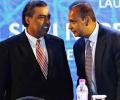
Mukesh's television unit has been aggressively wrapping up deals with hundreds of small players in a street-by-street effort to conquer that final hurdle in its cable TV drive


'I feel more like a chess player, thinking for long hours how to make the next move," Telecom Secretary Aruna Sundararajan tells Surajeet Das Gupta.

Decathlon is expecting to double its business in the country in the next three to five years, Decathlon India CEO Sankar Chatterjee said, according to local media reports.
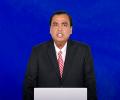
Asia's richest man Mukesh Ambani on Thursday said his oil-to-telecom-and-retail conglomerate is not seeking short-term profit but is in the business of creating wealth for the nation. Speaking at the company's annual shareholder meeting, he said all businesses of Reliance Industries Ltd continue to be key drivers of the Indian economy and have become a success story. "We are not in the business of pursuing short-term profit and hoarding wealth. "We are in the business of creating wealth for India," he said.

The three-day India Mobile Congress (IMC) will showcase the widening convergence of telecom with new domains, such as semiconductors and deep tech, P Ramakrishna, the forum's chief executive officer, said on Tuesday. With more than 250 global and domestic exhibitors, the seventh edition is expected to draw more than 100,000 visitors this year, he said. There will also be over 5,000 CXO-level delegates and more than 350 speakers.

Reliance Industries Ltd on Monday reported an almost flat March quarter net profit, amid a recovery in its core oil and petrochemicals business and sustained momentum across the consumer-facing telecom and retail businesses. RIL's net profit stood at Rs 18,951 crore, or Rs 28.01 per share, in the January-March quarter of the 2023-24 fiscal as compared to Rs 19,299 crore, or Rs 28.52 a share, a year ago, according to a company's stock exchange filing.

Reliance Industries Ltd, India's most valuable company, on Friday reported a 5 per cent drop in its June quarter net profit as lower fuel cracks and petrochemical margins outdid gains in telecom and retail businesses. The oil-to-retail-to-telecom conglomerate's consolidated net profit was at Rs 15,138 crore, or Rs 22.37 per share, in April-June -- the first quarter of the current 2023-24 fiscal year -- compared to Rs 16,011 crore, or Rs 23.66 a share, earnings a year back, according to a company's statement.

The merits and demerits of the telcos' 5G strategy however is clearly dependent on the financial muscle of players, reports Surajeet Das Gupta.
The US Congress has imposed a special fee of up to $4,500 on the H-1B and L-1 visas.

Canada-based Brookfield will acquire the Indian business of American Tower Corporation (ATC) for an enterprise value of $2 billion, a release said on Friday. The transaction is subject to regulatory approvals and expected to close in the second half of 2024. "Data Infrastructure Trust (DIT), an Infrastructure Investment Trust sponsored by an affiliate of Brookfield Asset Management, today announced the signing of an agreement with ATC to acquire 100 per cent of equity interests in American Tower's operations in India (ATC India), for an enterprise value of Rs 16,500 crore ($2 billion) which is subject to pre-closing terms as per the securities purchase agreement," it said.

The list of guests included celebrities from across the globe, politicians, the who's who of Hindi and south Indian cinema world and almost all the top cricketers of the country.
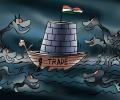
Indian exporters shipping goods to Israel may face higher insurance premiums and shipping costs due to the Israel-Hamas conflict, according to experts. Israel witnessed a surprise and unprecedented multifront attack by air, land and sea by the Hamas militant group, which rules the Gaza Strip, in its southern parts on Saturday morning. The International trade experts said the conflict may reduce the profits of domestic exporters but will not impact trade volumes unless war escalates.

The Adani family, led by Chairman Gautam Adani, is the most valued first-generation family business at Rs 15.44 trillion.

India is today the second-largest telecom market in the world with over a billion customers and close to 600 million Internet users. New connections are available on the tap, calls are virtually free and it's hard to imagine anyone without a mobile phone today. Globally, there would be few parallels to this success story that truly democratised telephony and empowered a billion-plus people, observes Airtel's Sunil Bharti Mittal.

While the market for satellite broadband currently is small, the potential is large as an estimated 30 per cent of the country does not have reliable terrestrial broadband services.

Ambani said, it will be ready for trials as soon as 5G spectrum is available and can be ready for field deployment next year.

Despite multiple headwinds at the start of 2023, the Indian markets delivered a strong performance, posting 19-20 per cent growth for the year. Even as new records were set, investor sentiment remains strong going into 2024, given the lower inflation, expectations of steady to lower interest rates, higher economic growth, and strong inflows. However, the overriding concern for most brokerages is valuations.

Despite the inherent attractiveness of the rural market for telecom operators various challenges still mar their entry.
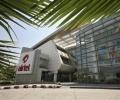
Bharti Airtel on Tuesday announced that it has scrapped the minimum recharge plan of Rs 99 in seven circles -- Andhra Pradesh, Bihar, Himachal Pradesh, Karnataka, Northeast, Rajasthan, and Uttar Pradesh (West). In these circles, the price of the entry-level plan now would be Rs 155. This 57 per cent increase in Airtel's entry-level plan comes two months after the telco discontinued the Rs 99 plan in Haryana and Odisha in November last year.

Funds will be raised via non-cumulative preference shares issued to Tata Sons on rights basis

'He asserted in his usual jovial style that he was not an MBA like his audience at IIM-Ahmedabad but perhaps had an even better business degree: MBB'. 'He went on to explain to his perplexed, blue chip B-School audience that MBB stood for "Marwadi by birth"!' Shivanand Kanavi salutes Shashi Ruia, co-founder of the Essar group who passed into the ages on November 25, 2024 in Mumbai.

The government believes firms which are subject to China's laws could be forced to hand over information to Beijing's security services.

'The government is unwilling or unable to provide the kind of relief that Vodafone India is asking for.'
Despite the infamous scams and taints that the industry has faced, each Indian can claim to be a proud beneficiary of the country's telecom revolution.

Domestic institutional investors pumped Rs 2.3 trillion into equities during H1 CY24. Of this, mutual funds contributed 80%.

The Modi government's flagship initiative 'Make in India' launched 10 years ago has helped the country boost exports, push investments and promote manufacturing. Under the initiative, launched on September 25, 2014, a series of measures have been taken by the government to boost local manufacturing. These initiatives include the rollout of production linked incentive (PLI) schemes for 14 sectors, easing foreign direct investment (FDI) norms, reducing compliance burden to improve business climate, all approvals through single window, and rolling out of the national logistics policy.

At present, there is no direct air connectivity between India and Myanmar.

Prime Minister Narendra Modi on Friday held bilateral talks with Italian counterpart Giorgia Meloni in Bari during which they discussed defence and security cooperation and hoped for further enhancing the defence industrial collaboration.

High spectrum charges would lead to rise in mobile services rates and adversely impact government's Digital India initiative by impeding telecom network expansion.


'Considering that an Internet company's market value is largely determined by its direct access to consumers for digital services, and largely served outside a sovereign country's control, it would appear reasonable in trade terms to discuss fees for a seat at the proverbial 'table' of opportunities in the largest open consumer market,' argues Venki Nishtala.

Taiwan is keen to collaborate with India and help it become a leader in the semiconductor space, Jason Ho, chairman of the Taiwan Chamber of Commerce in India, said, asserting that the Taiwanese companies have the supply chain for things that the Indian market needs. Manufacturing semiconductors - used in electric and hybrid cars, drones, and communication devices - is fairly complicated, entails huge investment, and can be a cumbersome process.

Tech giant Microsoft regained the top spot in the list of best employers to work for in India in 2024, followed by Tata Consultancy Services (TCS) and Amazon, according to a Randstad Employer Brand Research report released on Wednesday. Microsoft had topped the list in 2022, but slipped to fifth in 2023. The 2024 list is based on responses from 3,507 people.
FLAG Telecom, a Reliance group company has denied media reports alleging that it has resorted to high pricing impacting the growth of Indian business process outsourcing units and information technology enabled services.

The number of telephone subscribers in India increased from 1,183.15 million at the end of May to 1,186.63 million at the end of June.

'In the next 15-20 years, India will have at least 50 new (AI-driven) billion-dollar companies that are going to solve problems for the largest companies around the world.'

While smart boys like the Ruias of Essar, Ajay Piramal, Max India promoter Analjit Singh laughed all the way to the bank, the Tatas, Anil Ambani, Malaysian tycoon T Ananda Krishna of Maxis (which invested in Aircel), Sistema, and Norway's Telenor burnt their fingers, notes Surajeet Das Gupta.
